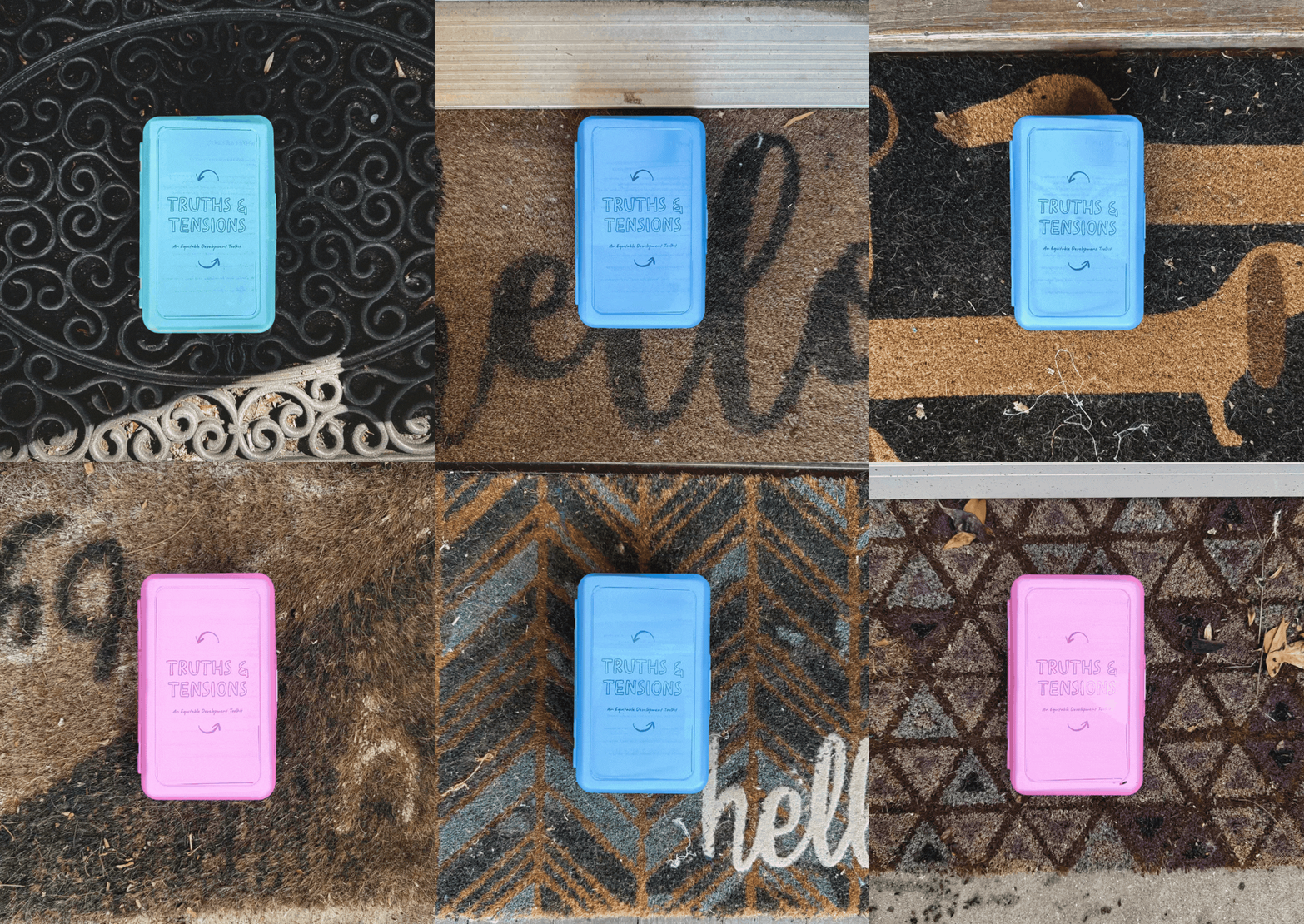
truths & tensions
An Equitable Development Toolkit
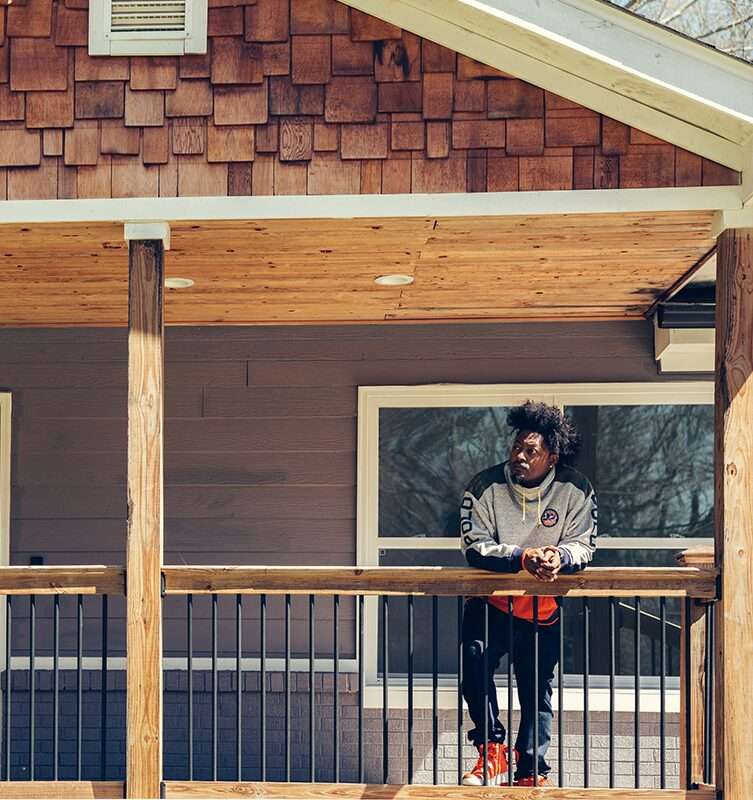
A project rooted in coming home. Rose served as chair of her local zoning committee. She'd sat in those rooms. She'd watched community members arrive with real concerns and leave feeling unheard. She'd seen meetings turn defensive, projects stall, and trust erode — not because communities resisted change, but because they were invited into the conversation too late.
Role:
Researcher, Methodologist & Designer
M.A. Final Project, Design for Sustainability, SCAD 2026
Scope:
Participatory toolkit, synthesis framework, and operational model for equitable community engagement in urban development
When her M.A. studies brought her to questions of systems thinking, biomimicry, and regenerative design, something clicked. The missing piece wasn't materials or technology. It was people — and the conditions that allow them to meaningfully shape the places they call home.
Truths & Tensions began as a question about one specific place: Valley of the Hawks, a 17-acre site along Atlanta's BeltLine Westside Trail extension into Bankhead. But the deeper she went — through systems mapping, stakeholder analysis, and research on green gentrification — the more she understood that the problem wasn't the site. It was the process.
The Problem
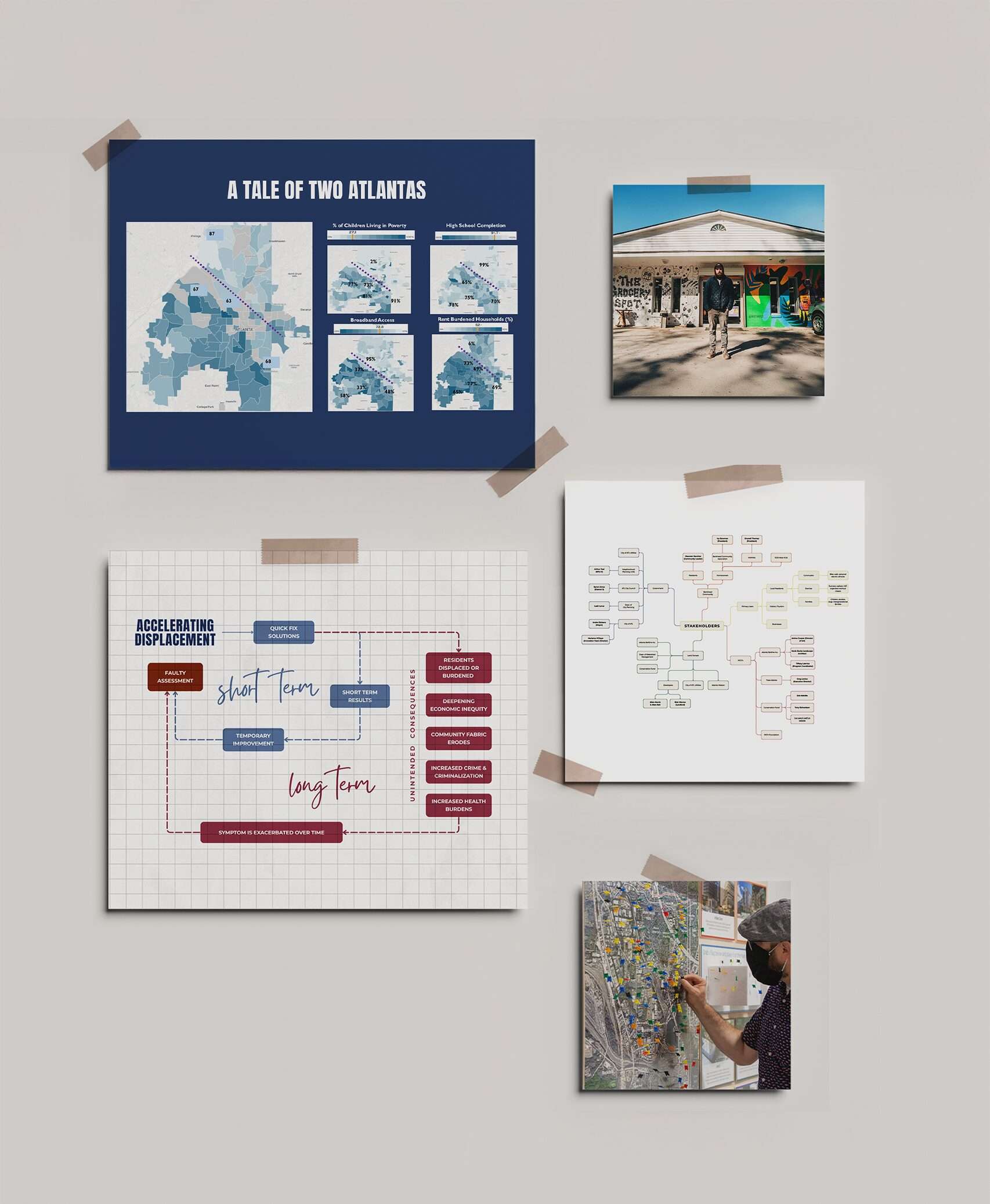
Atlanta is projected to reach 8 million residents by 2050, with more than $1.5 billion in public investment flowing into development across the region this year alone. And yet the phase that most determines whether a project succeeds — community engagement — is consistently treated as an afterthought.
By the time residents are invited to participate, designs are drafted, budgets are set, and constraints are locked in. People aren't shaping the project. They're reacting to it. Meetings turn defensive. Projects stall. Costs increase. Trust disappears.
The problem runs deeper still. In Atlanta, life expectancy varies by more than 20 years depending on ZIP code. When development arrives in communities that have absorbed decades of disinvestment, residents aren't just reacting to a project. They're reacting to history.
Displacement isn't an unfortunate side effect of progress. It's a systems failure, and it's predictable.
The Insight
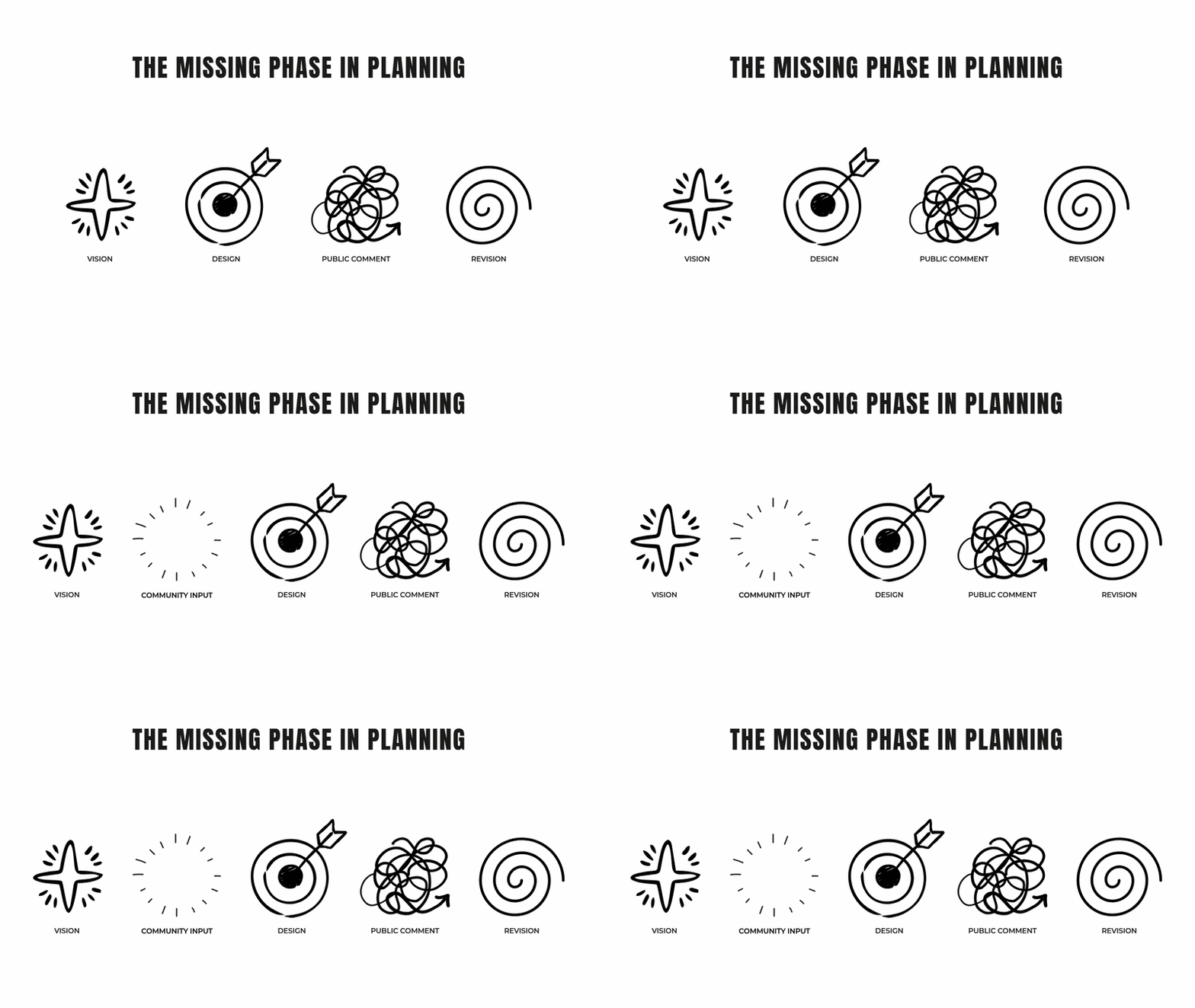
Traditional planning processes look like this:
Vision → Design → Public Comment → Revision.
There is no structured phase where communities can reflect on their own priorities before solutions are proposed. That missing moment is where the dysfunction begins — and where the opportunity lives.
The Toolkit
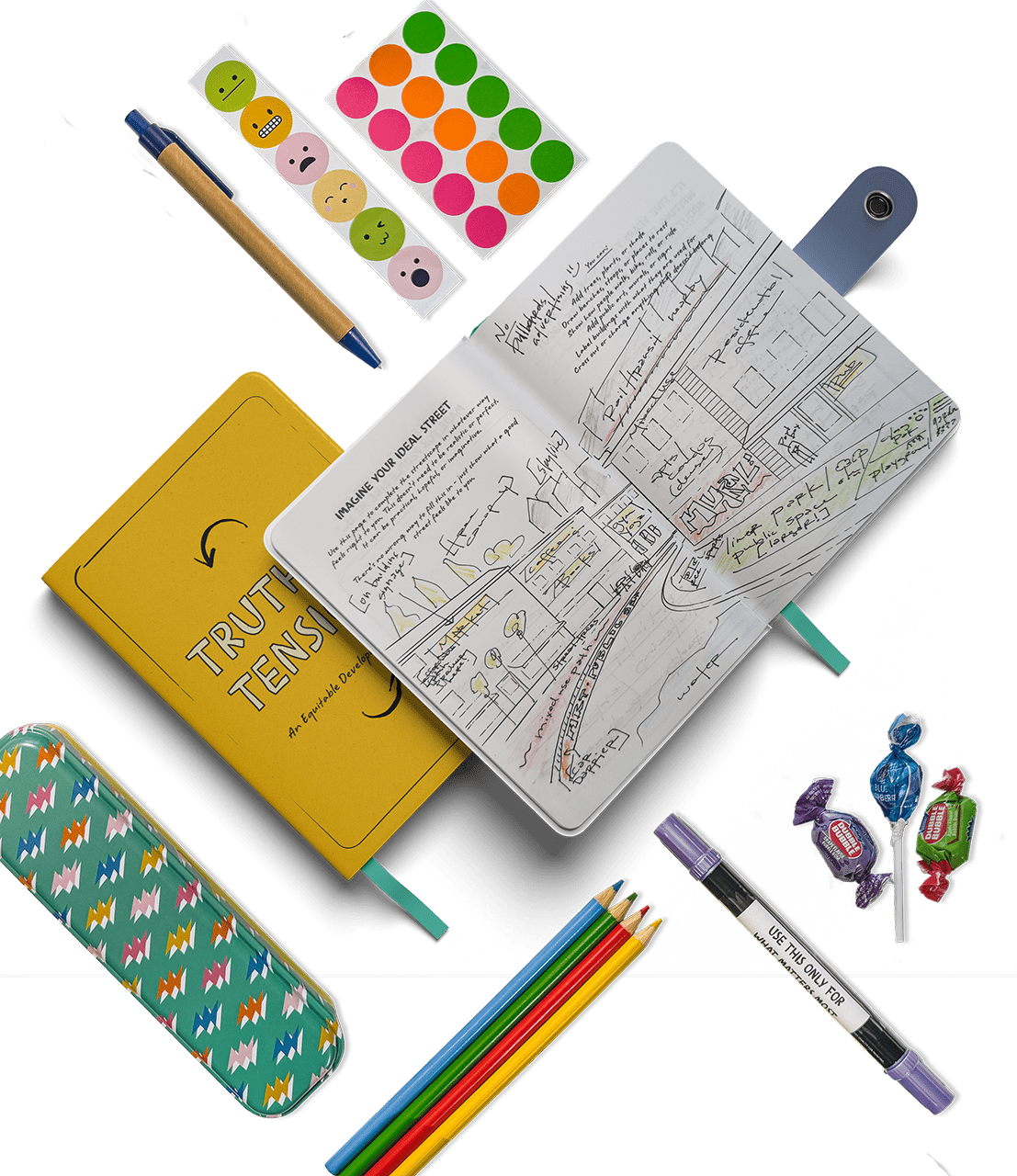
Truths & Tensions is a participatory sensemaking toolkit designed to fill that gap. It's a printed booklet residents complete privately, at their own pace, using simple materials.
No meetings required. No planning jargon. No pressure to perform participation publicly.
The toolkit is structured around three modules:
Everyday Truths & Values: what makes daily life work
Tensions & Tradeoffs: acknowledging that change holds mixed feelings
Future Memories: imagining what must be carried forward
The prompts are deliberately designed to surface what traditional engagement misses: emotional knowledge, relational priorities, fear alongside hope, and the specific things a community cannot afford to lose.
The Outputs
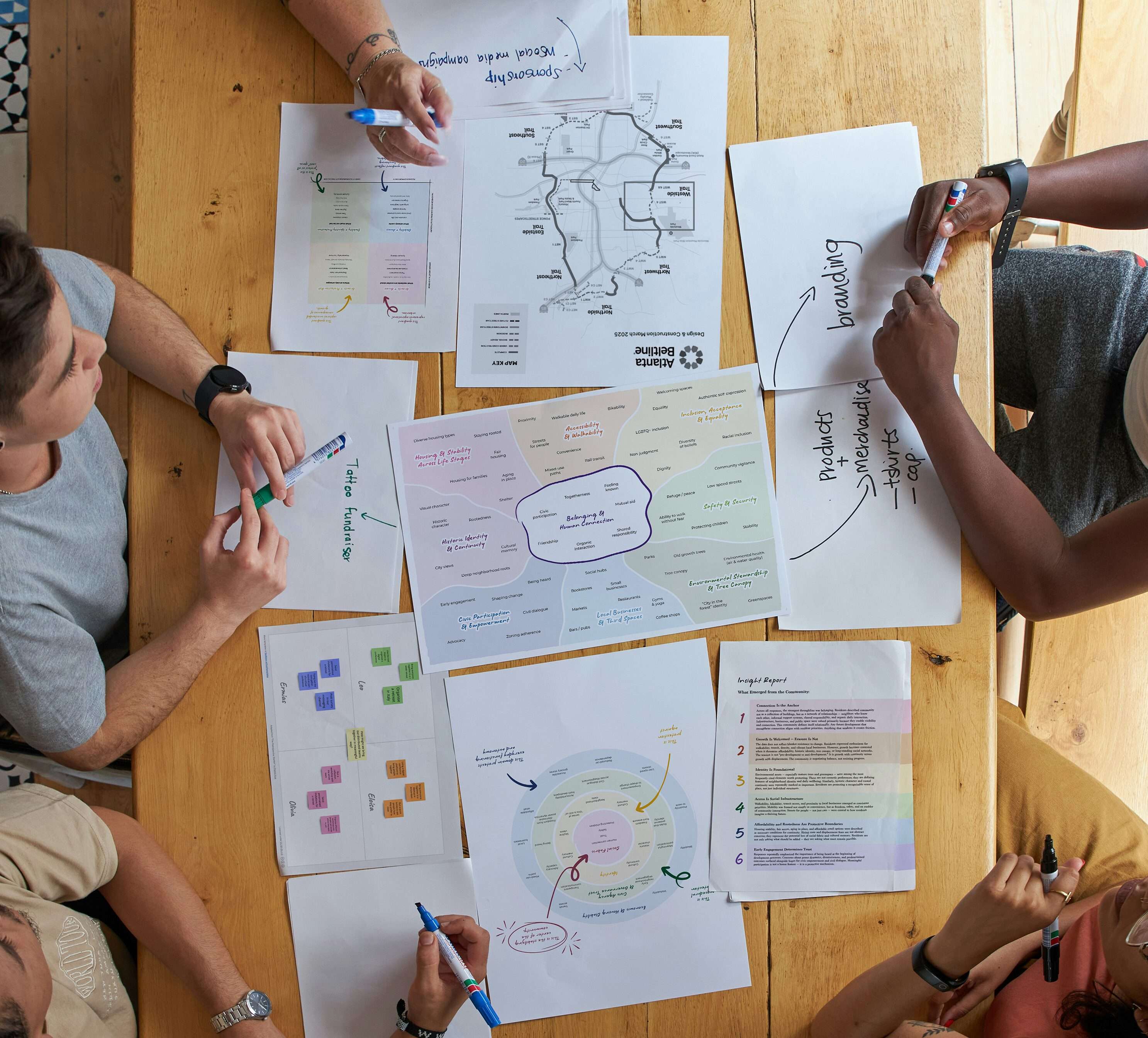
Responses are synthesized into four planning-ready deliverables that translate lived experience into formats decision-makers can actually use.
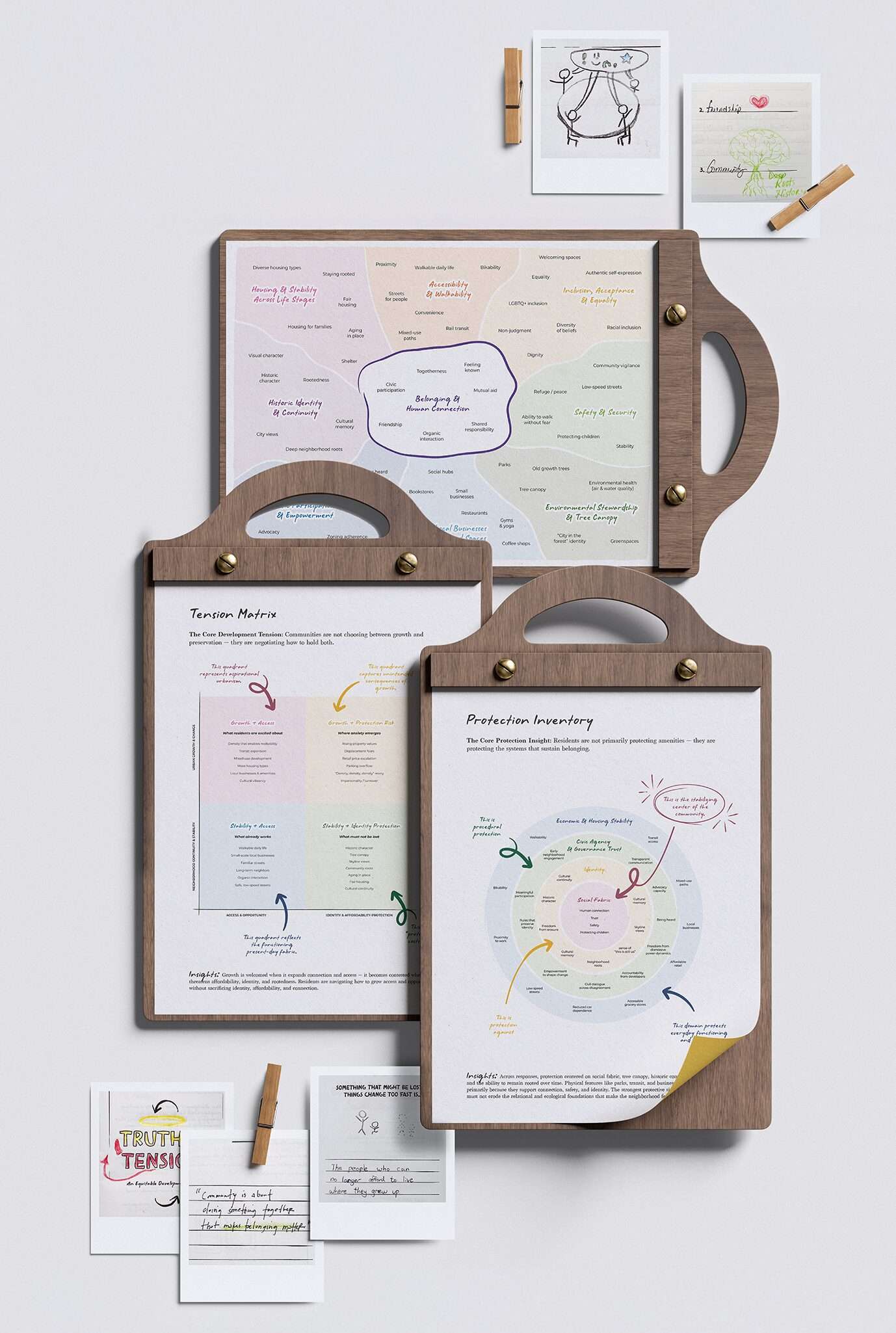
Community Values Map: makes invisible community priorities visible, from belonging and social fabric to civic agency and environmental stewardship.
Tension Matrix: maps competing priorities across four quadrants, creating shared language around tradeoffs before they escalate.
Protection Inventory: shifts the conversation from "we don't want change" to "these things must be protected" — making negotiation possible.
Visual Artifact Archive: preserves the drawings, annotations, and expressions that remind decision-makers there are real people behind every policy discussion.
What the Pilot Revealed
A small pilot group tested the methodology. The sample was intentionally limited, the goal was not representation but validation: to understand what kind of insight the toolkit could surface.
What emerged was striking. The dominant finding wasn't resistance to growth. It was a desire for growth with continuity. Residents expressed genuine enthusiasm for walkability, transit, density, and local businesses. What they feared was erasure: of affordability, of historic character, of the social networks and relationships that make the neighborhood feel like home.
Why It Matters
The Truths & Tensions redesigns where development begins.
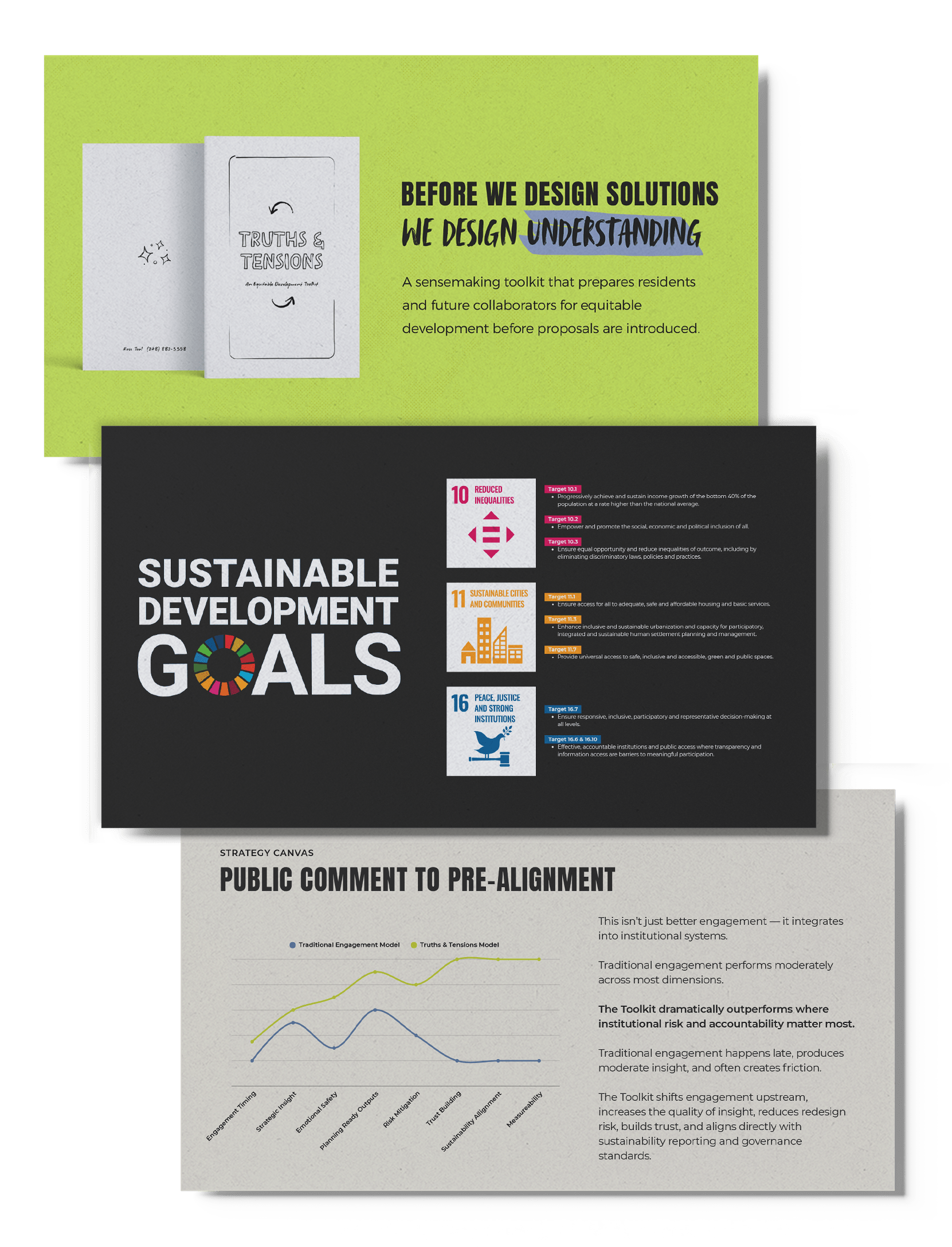
For planners and developers, it surfaces the insight needed to design responsibly, reducing backlash, lowering redesign risk, and strengthening the political viability of projects.
For residents, it creates a way to reflect and share on their own terms, not in a tense public room, not in technical planning language, but through storytelling and personal expression.
The toolkit aligns with SDG 10 (Reduced Inequalities), SDG 11 (Sustainable Cities), and SDG 16 (Strong Institutions), as well as GRI and ISO frameworks for community engagement and social responsibility. It is designed to scale — deployable by municipalities, planning firms, community organizations, and sustainability consultancies, through project contracts, licensing, or public funding partnerships.
Beyond frameworks and business models, this project reflects something more personal: a belief that the future of our cities shouldn't just be designed. It should be understood first.
Communities are not asking to stop change. They are asking to shape it.